One chess move at a time
"Those who succeed at the highest level basically manifest their unique character through their discipline"
Josh Waitzkin
At some point, we all wrestle with some of life's biggest questions.
What's my purpose?
What's my calling, my thing?
How do I figure out where I thrive?
They're rich, exciting questions. And in the same breath, they also feel overwhelmingly large. Especially when we’re at a crossroads, debating a career change, a new field of study, a hobby, or simply the itch to shake things up.
We're not short on options in modern life. If anything, we're sort of drowning in information. What we’re struggling with, more often than not, is where to begin. Where to even start when you're feeling a little lost, disconnected or unsure of where you’re meant to be.
The graduating class of 2026 comes to mind here, as they approach end of year exams and assessments, all while fielding questions about the rest of their lives. But this kind of questioning doesn't end at eighteen, or twenty-one. That same longing to know comes up at every age, and it tends to carry a bit of weight or expectation: figure out who you are, find your purpose, and then… get to it 🫡
Such clarity is a strange thing to expect of anyone, when you think about it, when none of us are ever really finished. We're all a work in progress. So how are you supposed to plant your flag or name your thing when you're right in the middle of becoming?
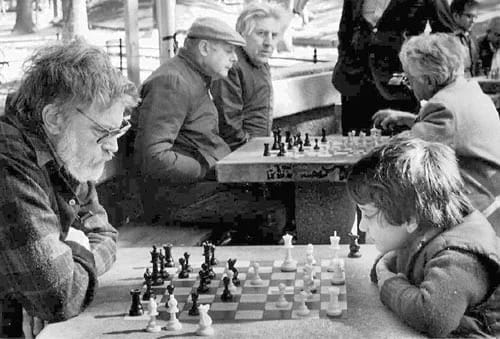
We were reminded of a story this week that made us think: maybe we’ve got the order a little backwards, sometimes.
Josh Waitzkin was six years old when he discovered chess in Washington Square Park, wandering through New York with his mother. Something about the scene pulled him in. The hustlers hunched over their boards, the fierce and scrappy street games. He didn't know it then, but that afternoon was the beginning of a lifelong love of learning.
Josh fell headlong into the game: the calculated chaos of it, the patterns and strategies he could create and destroy. He'd go on to become a US champion at eleven, an International Master at sixteen. He was also the kid whose childhood inspired the 1993 film Searching for Bobby Fischer.
The further Josh went into competitive chess, the more the game revealed him to himself. He came to see he was someone who loved to attack creative problems, and that he thrived in chaos. Ferocious about analysing his own play, he discovered that his sharpest growth came from his most painful losses, never the wins. That he could take pain, or fear, or a hostile crowd, and turn it into fuel.
Then his story takes an interesting turn. In his late teens, a coach pushed Josh to abandon his natural style, on the premise that to truly master the game he'd need to stop playing like himself and study the great defensive players instead. “What would Karpov play here?" he was reminded, rather than "what do I see?”
Over time, the abandonment of his own instincts cost him his competitive edge, then his love for the game itself.
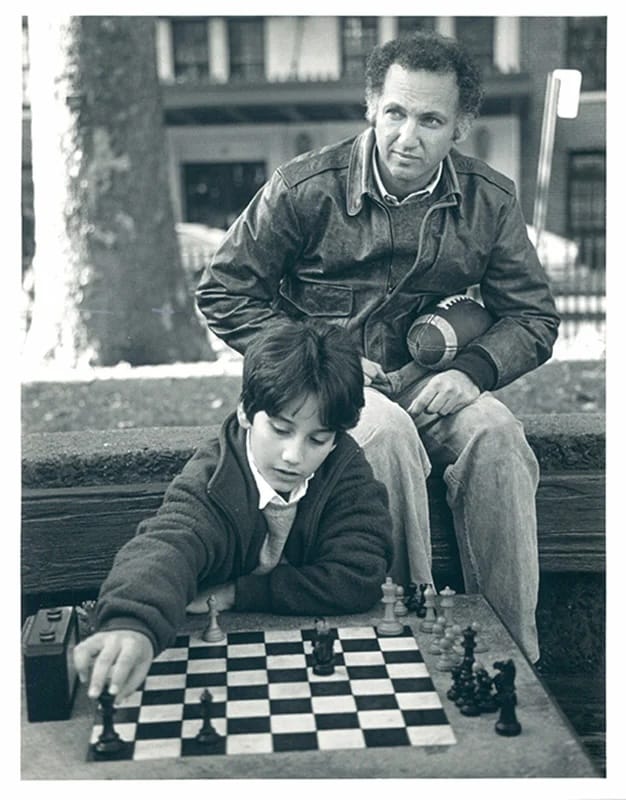
Our greatest growth so often comes from our darkest times, and we see it play out again here. Being knocked clean off his path is exactly what Josh needed, though he couldn't have known it then.
He found his way to Tai Chi, drawn in by the Eastern philosophy he'd been reading, and threw himself into learning all over again as a total beginner. Within a couple of years he was a national champion, and not long after, a world champion.
He hadn't given up chess entirely, though his process had shifted subconsciously. He still played the odd exhibition, and it was during one of these challenges, playing forty games at once, that he realised:
"I wasn't playing chess. I was doing Tai Chi... I was riding the energetic wave of the game."
The two arts had become, in his words, almost indistinguishable.
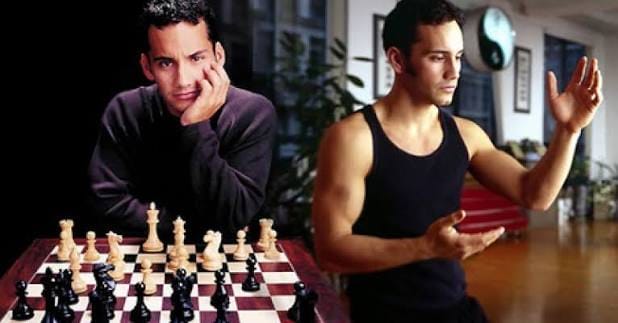
Now, Josh’s story is remarkable and unique. But you can watch many of these patterns and themes play out through countless high performers.
Perhaps the real gift is less about their raw talent for the game, sport, or craft… And more about their devotion to the discipline itself, whatever it happens to be. Because this devotion can bring in something bigger than skills or technical mastery.
There’s an interesting connection here between the human-being and the human-doing.
We often think of it as a balancing act, two sides of ourselves competing for space in a busy life. But the experience of deep learning might be a rare place where human-being and human-doing stops competing and starts to perform a pas de deux.
Because when you're in flow, immersed in the act of learning, you're fully doing, active, stretched to your edge. And at the same time, you’re in being mode, alive, curious, in discovery. You’re trying, failing, joining the dots, getting to know the ins and outs of something. And as a glorious by-product, you get to know yourself: how you think, how you best learn, what lights you up, what helps you persist when things get hard.
It reminds us of some wise words from Elizabeth Gilbert, who stopped encouraging people to chase their passion first and foremost, because "not everyone knows how to answer that command."
The alternative is far more simple. Drop the pressure to have all the answers, and pick something that fascinates you here and now. Maybe your curiosity eventually leads you to your passion and your purpose… Without feeling like you’re scaling a huge mountain.
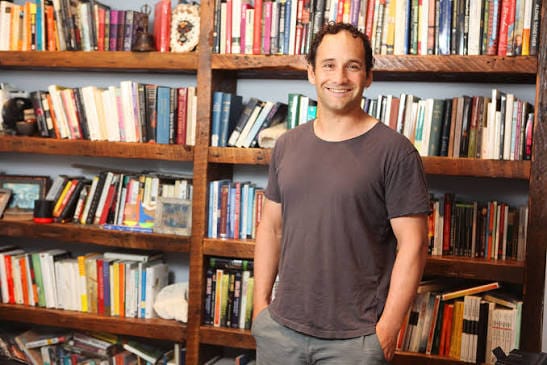
We're no masters of chess or Tai Chi, but we know a thing or two about perspective 😉 Perhaps the moves that can help most here are to zoom out, and to zoom back in.
Zoom out far enough to remember the bigger picture: any discipline, hobby, area of study or activity is a vehicle for getting to know yourself through the act of learning.
And when it all feels like too much, zoom back in, and simply start somewhere small. It's all an experiment. It's all data. Even a dead end tells you something about your passion, your strengths, where you find meaning, and where you might have impact.
No learning is ever wasted. So if you’re feeling a little stuck, or unsure of where to go next, remember the old saying:
Not all those who wander are lost.
The best performers in any field are insatiably curious, and character is built through discipline. Many disciplines! As many as you fancy trying over the course of your life.
We discover who we are by doing and playing, and letting things fall into place along the way.