Published 25 June 2026
It is what it is
"Endure the hard and cherish the good, as neither is permanent"
Ben Crowe, Where the Light Gets In
We're deep in the 2026 sporting calendar right now.
The World Cup in full swing, the grass-court season warming up, the northern hemisphere's summer majors and championships all on the horizon. And if you listen to enough post-match interviews, you'll hear the same response again and again in the wake of an unexpected injury, disappointment or loss. The player at the microphone usually shrugs with a small exhale: it is what it is.
On to the next question.
It has become one of those phrases that's almost a little throwaway through sheer repetition. We say it at work when an opportunity falls through. We say it at home when plans collapse. It slips out as a reflex for many of us, a verbal shrug, if you will. The mantra we go for when there's nothing left to do but let it be and carry on.
Here's what we find so interesting about this simple phrase, though. When someone says it is what it is, they're doing something more powerful than they realise. They're actively practising acceptance, right there in the moment.
Acceptance is one of the most important mindset muscles behind Where the Light Gets In and everything we do at Mojo, because it's one of the hardest things to master as humans. The willingness to recognise and let go of the things we can't control.

What's worth remembering is that acceptance isn't about ignoring or dismissing our feelings, our disappointment, our frustration, or even our grief. We don't have to pretend the uncontrollable or the unexpected doesn't sting. It's about learning to meet life where it is, to stop fighting against a reality that has already happened. As Shakespeare put it more than four hundred years ago, "There is nothing either good or bad, but thinking makes it so." It is what it is.
The reason acceptance matters is that the alternative costs us so much. When we refuse to accept what's already there, we end up carrying it around, adding weight to an already heavy load.
Acceptance lets us put some of that day-to-day weight down. Not by giving up, but by clearing enough space to ask 2 key questions:
1. Can I do anything about this? If so, take action.
2. If not, can I find a way to accept it?
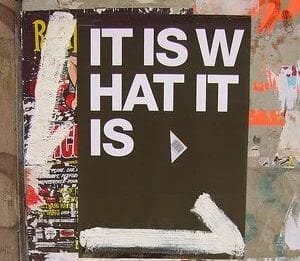
The next time you hear it is what it is, whether it's from someone around you or coming from your own reflex, clock it. That throwaway phrase is a skill, and one you can continuously strengthen.
And if you want to go a step further, there's an even deeper version of the same idea, one that got us excited this week:
This too shall pass.
It has its origins in ancient scripture, and what we love about it is that it cuts both ways.
When you're in the thick of something - a tough week, bad news, a season falling short - it's a reminder that nothing lasts. The difficulty will lift. You will get through it. That's the comforting version most of us know.
But flip it over, and it applies just as much to the good in our lives. The stroke of inspiration or luck. The momentous win. Or even the ordinary Tuesday when everyone's home, and the house is loud and full of life. Those moments pass too. And when we really take that on board, this too shall pass becomes a reminder not to miss them. To be where your feet are, here in the moment, enjoying it for what it is… Because just like the hard times, it will move on.
One of our Mojo teammates experienced this recently. One of Ash's boys was sick again, and it was one of those weeks where work and parenting curveballs collide, and nothing goes to plan.
Somewhere in the thick of it, nursing a sick toddler with an ever-changing schedule, both sides of the coin became clear. This would pass. The sleepless, stressful stretch wouldn't last forever. But so would this opportunity. His little boy would never be this small again. They wouldn't always have this much time together at home, to rest and play and enjoy one another's company. The chaos was tough, but it was also a gift.
The hard times pass, so hang in there.
The good times also pass, so hold on to them.
It is what it is. And this too shall pass.
These are two phrases you already say, or know. Now you get to practise them with purpose.
For more on this kind of mindset work, our Unlocking Perspective program is a great place to start 👇